
Why AI Wont Replace Web Designers Examples: The Ultimate 2026 Guide
Walk into any digital marketing meetup in Bengaluru, Hyderabad, or Pune right now, and you'll hear the same conversation buzzing across every table.
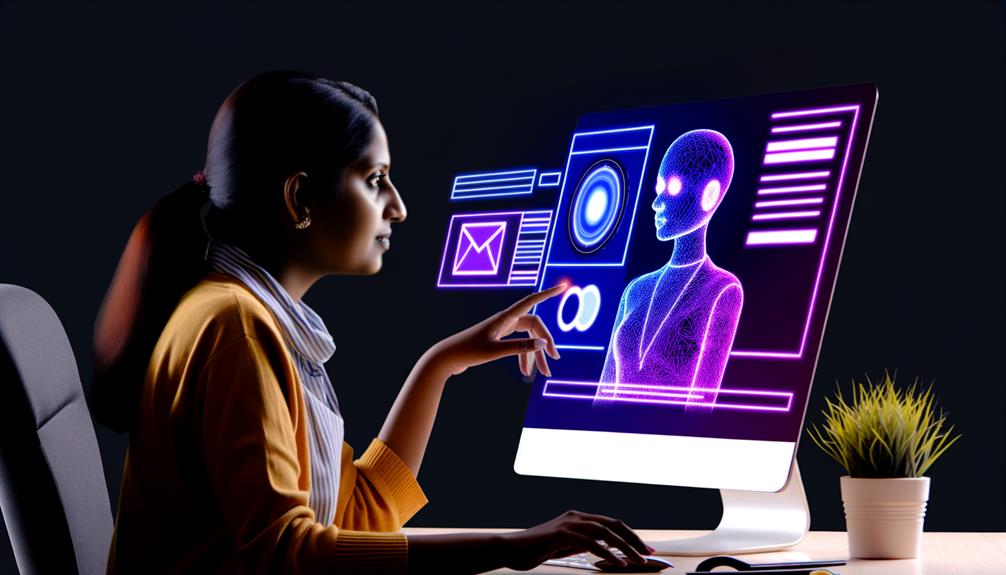
Walk into any digital marketing meetup in Bengaluru, Hyderabad, or Pune right now, and you’ll hear the same conversation buzzing across every table. Business owners, startup founders, freelancers — everyone is asking the same anxious question: Is AI about to take my job? Somewhere, a junior designer is quietly Googling “will AI replace web designers,” wondering if the career they’ve spent years building is on borrowed time. A boutique agency in Ahmedabad just had a client ask if they should just use an AI tool to build their next website instead. The fear is real, the noise is deafling, and the misinformation is everywhere. So let’s cut through it — because understanding why AI wont replace web designers is not just an academic exercise for Indian businesses. It could be the single most important thing you decide this quarter for your brand’s digital future.
The AI conversation in India has reached a fever pitch, and understandably so. With the government pushing Digital India initiatives, with lakhs of small and medium businesses finally taking their operations online post-pandemic, and with AI tools flooding the market with slick demos and irresistible promises, it’s tempting to believe that a machine can now do everything a skilled web designer does — faster, cheaper, and without the overhead. And let’s be honest, some of these tools are genuinely impressive. AI can now generate layouts, suggest color palettes, automate responsive design tweaks, and even produce basic copy. The progress is remarkable, and any honest conversation about the future of web design has to acknowledge that.
But here’s what the AI tool vendors won’t tell you in their promotional videos: building a website that actually works for an Indian business — one that speaks to your specific audience, reflects your brand’s soul, converts visitors into customers, and stands out in an increasingly crowded digital marketplace — is an art form layered on top of engineering. It’s about understanding the nuances of user behavior in Tier 1, Tier 2, and Tier 3 cities where internet users have vastly different expectations, device preferences, and cultural contexts. It’s about solving real business problems — getting a Rajasthani handicraft exporter’s products in front of international buyers, or helping a Chennai-based fintech startup build the kind of trust that makes a first-time user hand over their bank details. No prompt, no algorithm, no matter how sophisticated, can replace the strategic thinking, the empathy, and the creative judgment that an experienced human designer brings to those challenges.
In this article, we are going to break down exactly why AI, despite all its headline-grabbing capabilities, is not the death knell for web design that the sensationalists want you to believe — and we’ll walk you through concrete, real-world examples that illustrate this point far better than any abstract argument ever could. You will learn where AI genuinely excels in the web design workflow and how you can leverage those strengths without surrendering the human creativity that makes your brand truly memorable. You will understand the specific skill gaps that AI simply cannot bridge in areas like brand storytelling, cultural nuance, UX empathy, and strategic conversion optimization — areas that matter enormously in a diverse, fast-moving market like India. And perhaps most importantly, you will come away with a clear-eyed perspective that helps you make smarter decisions whether you are a business owner evaluating your next website redesign, a designer navigating your own career trajectory, or a digital agency leader charting the path forward for your team.
The truth is, every major technological shift — from the printing press to Photoshop, from mobile-first design to responsive frameworks — has triggered the same panic. And every time, the professionals who adapted, upskilled, and learned to work alongside the new technology didn’t just survive; they thrived. AI is no different. It is an extraordinarily powerful tool, and web designers who master it will become more formidable than ever. But the notion that a tool — no matter how clever — can replace the deeply human act of designing an experience that connects, persuades, and delights? That idea deserves a much closer examination than the clickbait headlines suggest. Let’s dive in.
Pain Points
Cultural Nuance and Local Brand Identity That Resonates
Indian consumers respond to design that speaks their language — literally and culturally. Yet most AI design tools are trained predominantly on Western datasets, producing layouts and color palettes that feel borrowed from Silicon Valley aesthetics rather than rooted in Indian sensibilities. A textile retailer in Surat trying to showcase Banarasi silk sarees online needs design imagery that honors heritage, uses warm festive tones, and speaks to a buyer who values tradition. An AI tool will generate a clean, minimal, globally safe design — technically correct but emotionally hollow. Similarly, a South Indian restaurant in Chennai cannot rely on AI to understand that the logo needs to reflect Chettinad architecture or that the colour palette for a Pongal campaign should carry the earthy warmth of the harvest season. Without deep cultural context built through human experience, AI-generated designs risk alienating the very audience they intend to attract.
Complex, Evolving Business Requirements That AI Cannot Navigate
Indian SMEs and startups operate in environments where business requirements shift rapidly — sometimes daily. A bootstrapped D2C cosmetics brand in Bangalore may start with three product categories and, within six months, expand into twelve after identifying demand from Tier-2 cities during a festive sale. An AI tool designs a website for the original scope. A human web designer sits with the founder, understands the growth trajectory, and builds a sitemap and architecture that accommodates future scaling. This iterative, conversation-driven process is something AI fundamentally cannot replicate. A logistics startup in Hyderabad pivoting its entire business model from B2B to D2C last year needed a website redesign that captured an entirely new brand voice — one built from team stories, customer testimonials from Gudur and Vizag, and a visual identity representing Indian roads and Indian distances. No AI tool was having that conversation.
Nuanced Communication and E-Commerce Integration for Indian Consumers
India’s digital commerce ecosystem operates differently from any other market. Payment flows through UPI, COD remains critical for Tier-3 and Tier-4 buyers who distrust online transactions, and regional language content drives conversion rates in ways English-first design never could. An Ayurvedic wellness brand in Kerala selling to customers in Malappuram or Kannur cannot simply translate its English website into Malayalam — it needs a design that respects script readability, accommodates longer Malayalam character strings in buttons and forms, and integrates Cashfree or Razorpay with region-specific payment defaults. A handmade jewellery brand on Instagram expanding to a full website needs a design that handles variable product photography, custom gift wrapping for weddings, and festival-specific popup campaigns for Onam and Eid. These are not edge cases — they are the mainstream reality of Indian e-commerce, and they demand human design decisions that go far beyond template selection.
Accessibility Across Devices, Connections, and Abilities
Over 600 million Indians access the internet primarily through budget Android phones on 2G or 3G connections in villages across Rajasthan, Odisha, and Bihar. AI-generated websites, optimised for desktop and high-bandwidth environments in mind, often arrive bloated with scripts, heavy imagery, and animations that load slowly or break on low-end devices. A panchayat-level government services portal or a cooperative bank in rural Maharashtra cannot serve farmers with a website that takes twelve seconds to load on a Reliance Jio feature phone. Beyond performance, accessible design in India must account for users with low literacy, visual impairments, and diverse linguistic backgrounds — challenges that require designers who understand these communities intimately, not algorithms trained on datasets that underrepresent them.
Compliance, Legal Requirements, and Trust-Building Design
Indian businesses, particularly in finance, healthcare, and legal services, operate under strict regulatory frameworks that shape how their websites must function and appear. A microfinance company in Patna needs a website that prominently displays its RBI registration details, complies with IT Act 2000 guidelines, and presents loan calculators that adhere to transparent pricing norms. A diagnostics chain in Ahmedabad must ensure patient data privacy declarations are not just legal text but clear, trustworthy communication. AI tools do not inherently know that an Indian consumer searching for a loan app needs to see regulatory credentials before sharing phone numbers. Human designers build this trust architecture deliberately — through placement, language, hierarchy, and transparency — because they understand the history of digital fraud that has made Indian consumers cautious.
Navigating Difficult Clients and Delivering Under Ambiguity
A significant, often underreported challenge in the Indian web design industry is client management itself. A family-owned hospital in Coimbatore wanting a website may involve three generations of stakeholders with conflicting preferences — the founder surgeon who wants a clinical look, the second-generation administrator who wants a modern feel, and the marketing manager who simply wants it to “look like Apollo.” AI cannot mediate these competing visions, cannot read the room in a client meeting, and cannot produce a design that satisfies stakeholders who disagree. A real estate developer in Gurugram launching a luxury villa project needs a website that appeals to NRIs in Dubai and Delhi’s elite simultaneously — a design brief that will evolve through dozens of revisions and requires a human collaborator who can absorb feedback, push back professionally, and ultimately deliver something better than the brief itself.
Standing Out in a Saturated, Homogenised Digital Market
Finally, and perhaps most critically, Indian businesses are fighting for attention in one of the most crowded digital landscapes in the world. Thousands of coaching centres in Kota, apparel brands on Shopify, and fintech startups in Bangalore are all competing for the same digital real estate. AI tools, trained on common patterns and popular aesthetics, inevitably produce designs that resemble each other. When a customer’s fourth herbal supplement brand looks indistinguishable from the third, brand differentiation collapses. A handcrafted spice brand from Kerala competing against fifty other “premium organic turmeric” websites cannot win with an AI-generated layout. It needs a creative director who understands Kerala’s spice trade history, who can design packaging-grade visual language, and who builds a digital experience that tells a story no algorithm could generate. In a market where the first impression is the only impression, originality is not a luxury — it is survival.
The Indispensable Human Element: Beyond Automation
While AI can automate repetitive tasks and generate design variations at lightning speed, its fundamental limitation lies in its inability to replicate the deeply human faculties of intuition, empathy, and strategic foresight. These are not merely soft skills; they are the bedrock upon which truly impactful web experiences are built, especially in a market as diverse and dynamic as India. An AI can process data points about user behaviour, but it cannot understand the unspoken anxieties of a first-time online buyer in Nagpur, the cultural significance of a particular colour palette to a family in Odisha planning a wedding, or the subtle shift in market sentiment that requires a complete brand pivot.
Strategic Vision and Business Acumen
A web designer for an Indian business isn’t just a pixel pusher; they are a strategic partner. They sit down with a startup founder in Hyderabad, not just to discuss colour schemes, but to understand their 5-year growth plan, their target demographic’s purchasing power, and their unique competitive advantage against established players. They help a traditional jewellery brand in Jaipur translate its centuries-old heritage into a digital narrative that resonates with a global audience while retaining local authenticity. This involves:
- Market Analysis and Positioning: Human designers can interpret complex market trends, understand the nuances of consumer behaviour across Tier 1, 2, and 3 cities, and help position a brand strategically. For instance, designing an e-commerce platform for organic food in Chennai requires understanding local dietary preferences, supply chain logistics, and the specific concerns of health-conscious consumers, which goes far beyond what an AI-generated template can offer.
- Problem Identification and Solution Design: Businesses often come with vague problems (“our website isn’t converting”). A human designer delves deeper, asking probing questions, conducting user interviews in local languages, and identifying the root cause – perhaps it’s a lack of trust in online payments, confusing navigation for non-English speakers, or imagery that doesn’t resonate culturally. AI can only solve problems it’s explicitly programmed to recognise, not the ambiguous, evolving challenges of real-world business.
- Scalability and Future-Proofing: A human designer anticipates future needs. If a D2C apparel brand in Bengaluru plans to expand from women’s wear to men’s and children’s wear within two years, a human designer will architect the website for modularity and easy expansion, creating a design system that scales. An AI, working off current data, might produce a design that quickly becomes obsolete, necessitating costly overhauls.
Emotional Intelligence and Empathy in User Experience
Empathy is the cornerstone of great UX, and it’s a uniquely human trait. AI can simulate empathy based on data, but it cannot genuinely understand or feel the user’s emotional state. In India, where cultural context, trust, and personal relationships play a significant role in purchasing decisions, empathy is paramount.
- Understanding Cultural Sensitivities: A human designer knows that certain imagery or linguistic choices might be offensive or misconstrued in particular regions or communities within India. Designing a healthcare portal for users across different states, for example, requires sensitivity to diverse health beliefs, local customs, and language variations. An AI, trained on generic datasets, might miss these critical nuances, leading to alienation or even backlash.
- Building Trust and Connection: Trust is a major barrier for many Indian consumers, especially in online transactions. Human designers understand how to build trust through transparent communication, clear privacy policies (aligned with India’s IT Act 2000), familiar payment gateway integrations (like UPI), and testimonials that feature diverse Indian faces. They design experiences that feel secure and reliable, rather than just functional.
- Intuitive Interaction for Diverse User Bases: India’s internet user base is incredibly diverse in terms of digital literacy, device access, and language proficiency. An AI might optimise for a ‘standard’ user, but a human designer can create an interface that is intuitive for a first-time internet user in a rural village of Uttar Pradesh, using familiar metaphors and simplified language, while also catering to a tech-savvy professional in Mumbai. This deep understanding of cognitive load and cultural heuristics is beyond current AI capabilities.
Creative Problem Solving and Innovation
AI excels at optimisation and pattern recognition. It can generate variations of existing solutions. But true innovation — conceiving something entirely new, breaking established patterns, or crafting a unique brand narrative — remains firmly in the human domain.
- Original Concept Generation: When a client in Kolkata wants a website that tells the story of their family’s century-old confectionery business, an AI might generate a standard e-commerce site. A human designer, however, can weave in interactive timelines, nostalgic imagery, regional recipes, and customer stories, creating a truly unique and memorable digital experience that sets the brand apart.
- Iterative Design Driven by Feedback: Design is rarely a linear process. It involves constant feedback loops, client revisions, user testing, and adapting to new insights. A human designer can interpret subjective feedback (“make it feel more vibrant,” “I want it to evoke heritage but also modernity”), translate it into actionable design changes, and mediate conflicting opinions among stakeholders. AI struggles with subjective interpretation and dynamic, unstructured feedback.
- Crafting Unique Brand Identity: In a crowded Indian market, differentiation is key. AI, by its nature, tends to produce designs that converge towards popular aesthetics, leading to homogenisation. A human designer, conversely, leverages creativity to forge a distinctive brand identity that captures the essence of a business, whether it’s a boutique hotel in Goa, a social enterprise in Bengaluru, or a traditional art gallery in Delhi. This unique identity is what captivates audiences and fosters brand recall.
In essence, while AI will undoubtedly become an invaluable assistant, the strategic thinking, emotional intelligence, and creative spark that define truly great web design will remain the exclusive preserve of human professionals. For Indian businesses navigating a complex and competitive digital landscape, this human touch isn’t a luxury; it’s a necessity for survival and growth.
Use Cases: Where Human Expertise Becomes Indispensable
The abstract arguments about AI’s limitations find their most potent illustration in real-world business scenarios across India. Here, we delve into concrete examples where the human web designer’s role is not just preferred, but absolutely critical for success.
Crafting a Niche E-commerce Experience for Artisanal Products
Scenario: A cooperative of Warli artists from Maharashtra wants to launch an online store to sell their unique tribal paintings and handcrafted items directly to customers, both within India and internationally. They aim to empower the community and preserve their art form.
- Human Designer’s Indispensable Role:
- Storytelling and Cultural Context: An AI can list products, but it cannot convey the rich history, the individual artist’s journey, or the cultural significance of Warli art. A human designer works with the artists, understanding their stories, the symbolism behind their motifs, and translates this into an emotionally resonant digital narrative. This involves bespoke photography, video integration showcasing the craft process, and engaging copy that educates and inspires.
- Authentic Visual Language: While AI can generate ‘ethnic’ patterns, a human designer understands the genuine aesthetic of Warli art – the earthy tones, the specific stylistic elements, and how to present them respectfully and attractively. They ensure the website’s visual identity honours the art form rather than appropriating it, using custom icons, textures, and typography that reflect the heritage.
- Complex Product Presentation: Artisanal products often have variations in size, colour, and customisation options. A human designer builds a robust e-commerce framework that handles these complexities gracefully, making it easy for customers to browse, filter, and customise their purchases, integrating features like “meet the artist” profiles and “custom order” forms.
- Trust and Logistics for Diverse Audiences: For international buyers, trust is built through secure payment gateways, clear shipping policies, and transparent pricing (including potential international duties). For Indian buyers, integrating UPI, COD options, and regional language support for product descriptions and customer service is crucial. A human designer navigates these diverse requirements, ensuring a seamless experience for all.
- Why AI Falls Short: AI would likely produce a generic e-commerce template, failing to capture the soul of Warli art. It wouldn’t understand the nuances of storytelling required to connect with buyers on an emotional level, nor could it adapt to the specific logistical and trust-building requirements of selling unique, handcrafted goods from a rural Indian cooperative.
Developing a Trust-Centric Platform for a Rural Microfinance Institution
Scenario: A non-banking financial company (NBFC) based in Odisha aims to provide small loans to farmers and women entrepreneurs in remote villages. Their primary user base has low digital literacy, limited access to high-speed internet, and a strong reliance on word-of-mouth and personal relationships for financial decisions.
- Human Designer’s Indispensable Role:
- Designing for Low Digital Literacy: The designer crafts an ultra-simple, intuitive interface with large buttons, clear icons, and minimal text, often in Odia or other regional languages. They might incorporate voice-guided navigation or video tutorials to explain complex financial terms, understanding that traditional text-heavy forms will alienate users.
- Building Trust Through Visuals and Flow: Knowing the target audience’s inherent skepticism towards digital finance, the designer prioritises trust signals. This includes prominent display of RBI registration details, clear contact information, testimonials from local beneficiaries, and a step-by-step application process that feels transparent and secure. They design loan calculators that are easy to understand, showing all charges upfront.
- Accessibility for Low-Bandwidth Environments: The designer ensures the platform is lightweight, loads quickly on 2G/3G connections, and is highly responsive on basic smartphones. This involves optimising image sizes, minimising complex scripts, and prioritising essential functionality over flashy animations.
- Cultural Sensitivity in Communication: The language and tone used must be respectful, reassuring, and culturally appropriate, avoiding jargon. A human designer understands the local context and ensures the platform resonates with the community’s values and financial habits.
- Why AI Falls Short: AI-generated financial platforms are typically designed for urban, digitally savvy users with high-speed internet. They would overwhelm users with complex forms, dense legal text, and heavy visuals, completely missing the mark on trust, accessibility, and cultural relevance for a rural Indian audience.
Launching an Immersive Digital Presence for a Heritage Tourism Brand
Scenario: A boutique travel agency specialising in bespoke heritage tours of Karnataka (e.g., Hampi, Mysore, Badami) wants a website that offers an immersive experience, attracting both high-end domestic tourists and international visitors looking for authentic cultural journeys.
- Human Designer’s Indispensable Role:
- Experiential Storytelling: The designer doesn’t just list tours; they create a digital journey. This involves integrating high-quality photography and videography, interactive maps of heritage sites, virtual tours, and engaging narratives about the history, architecture, and local culture of each destination. They craft a visual language that evokes the grandeur and mystique of Karnataka’s heritage.
- Curated Content and Personalisation: A human designer understands that high-end travellers seek unique, customisable experiences. The website allows for bespoke itinerary building, showcases exclusive experiences (e.g., private temple visits, culinary tours), and uses design elements to highlight the luxury and exclusivity of the offerings.
- Multi-Lingual and Multi-Currency Support: For an international audience, seamless translation into several languages (French, German, Japanese) and dynamic currency conversion (INR, USD, EUR) is essential, not just for text but also for booking flows and customer support. A human designer ensures these integrations are flawless and culturally appropriate.
- Complex Booking and Inquiry Systems: The designer builds a sophisticated booking system that can handle custom tour requests, variable pricing, group bookings, and integration with local payment gateways and international credit card processors, while providing excellent user support channels.
- Why AI Falls Short: AI would likely generate a functional but generic travel portal, relying on stock imagery and standard tour descriptions. It would lack the emotional depth, the curated storytelling, and the sophisticated customisation required to attract and convert discerning heritage travellers, failing to convey the unique allure of Karnataka’s historical treasures.
Implementation Roadmap: Integrating AI as a Co-Pilot, Not a Replacement
The future of web design isn’t about choosing between AI and humans; it’s about intelligent collaboration. For Indian businesses and design agencies, the key is to strategically integrate AI tools to augment human capabilities, enhance efficiency, and free up designers for higher-value, creative work. Here’s a step-by-step roadmap:
Step 1: Identify Repetitive and Data-Intensive Tasks for AI Delegation
Start by auditing your current web design workflow to pinpoint areas where AI can take over grunt work, allowing human designers to focus on strategic thinking and creativity.
- Initial Wireframing and Layout Generation: Use AI tools (like Figma’s AI plugins, Adobe Sensei, or even advanced no-code builders with AI features) to quickly generate multiple layout options based on content and basic requirements. This provides a starting point, saving hours of manual drafting.
- Mood Board and Concept Generation: Leverage AI image generators (Midjourney, DALL-E, Stable Diffusion) to create visual mood boards, explore colour palettes, and generate preliminary imagery for brand concepts, especially for Indian-specific themes. For instance, prompt AI to generate images evoking “Rajasthani folk art modernised for a luxury brand” or “futuristic fintech interface with Indian design elements.”
- Basic Image Optimisation and Asset Management: AI can automatically compress images, convert formats, and even remove backgrounds, ensuring websites load faster on diverse Indian network conditions (2G/3G in rural areas). Tools can also help organise and tag design assets efficiently.
- Responsive Design Breakpoint Testing: AI-powered tools can quickly simulate how a website looks and performs across hundreds of devices and screen sizes, identifying potential issues faster than manual testing.
- A/B Testing Variation Generation: For e-commerce sites in Mumbai or Bengaluru, AI can rapidly generate multiple variations of a call-to-action button, headline, or product layout for A/B testing, helping optimise conversion rates.
- Code Generation for Boilerplate Elements: For front-end developers, AI can generate basic HTML/CSS for common components, reducing coding time for repetitive elements.
Step 2: Upskill Your Design Team in AI Tools and Prompt Engineering
Investing in your team’s skills is paramount. AI is a tool, and its effectiveness depends on the operator.
- Dedicated Training Programs: Organise workshops and subscribe to online courses (e.g., NASSCOM FutureSkills, Coursera, Udemy, local bootcamps) focused on popular AI design tools and their practical applications.
- Mastering Prompt Engineering: Teach designers how to craft effective prompts for AI image generators and text-to-design tools. This involves understanding context, specificity, stylistic cues, and iterative refinement. For example, learning to prompt for “a minimalist website header for a Chennai-based organic skincare brand, incorporating traditional Tamil motifs in a contemporary style” yields far better results than a generic prompt.
- Understanding AI’s Capabilities and Limitations: Educate the team on what AI does well and where human intervention is critical. This fosters realistic expectations and prevents over-reliance on AI for tasks it’s not suited for.
- Encourage Experimentation: Create a safe space for designers to experiment with new AI tools, share findings, and integrate them into their personal workflows.
Step 3: Establish a Human-in-the-Loop Workflow
The most effective AI integration involves a continuous feedback loop where human creativity guides and refines AI output.
- AI for Ideation, Human for Curation: Use AI to generate a wide array of ideas (layouts, colour palettes, copy snippets). The human designer then curates, selects the best options, and refines them to align with brand identity, cultural context, and strategic goals.
- AI for Automation, Human for Strategy: Delegate repetitive tasks to AI, freeing up designers to focus on higher-level strategic decisions, client relationship management, user research (especially field research in diverse Indian demographics), and innovative problem-solving.
- Iterative Refinement: Don’t accept AI’s first output. Use AI as a starting point, then apply human judgment, client feedback, and user testing data to iterate and improve the design. For example, an AI-generated layout might be functionally sound, but a human designer will inject the ‘soul’ and brand personality required for an Indian audience.
Step 4: Leverage AI for Enhanced Personalization and A/B Testing
AI’s data processing capabilities can significantly boost personalisation and optimisation efforts, particularly crucial in India’s diverse market.
- Dynamic Content Delivery: Use AI to analyse user behaviour, location (e.g., showing Hindi content to users from Uttar Pradesh, or Marathi to users from Maharashtra), and preferences to dynamically adjust website content, promotions, and even layouts.
- Optimised User Journeys: AI can predict optimal user paths and suggest design tweaks to reduce friction points, leading to higher conversion rates for e-commerce, lead generation, or service sign-ups.
- Rapid A/B Testing: AI can quickly generate and deploy multiple variations of design elements (e.g., different hero sections for a festive sale campaign in Delhi) and analyse their performance, allowing for faster optimisation cycles.
Step 5: Focus Human Creativity on High-Value, Strategic Areas
With AI handling the mundane, designers can dedicate their time and expertise to tasks that truly differentiate a brand.
- Brand Strategy and Storytelling: Developing compelling brand narratives that resonate with Indian cultural values and aspirations.
- Complex UX Challenges: Designing intuitive experiences for niche user groups, users with accessibility needs, or for entirely new digital products.
- Cultural Adaptation and Localisation: Ensuring design elements, language, and user flows are perfectly tailored to specific regional or linguistic contexts within India.
- Emotional Design: Crafting experiences that evoke specific emotions, build trust, and foster deep brand loyalty – critical for success in India.
- Client Relationship Management and Stakeholder Alignment: Mediating client expectations, translating business goals into design solutions, and managing complex projects with multiple stakeholders.
- Innovation and Disruptive Design: Conceptualising entirely new digital experiences that push boundaries and create market leadership.
Step 6: Continuously Evaluate AI Tool Performance and Ethical Implications
AI is rapidly evolving. Regular assessment and adherence to ethical guidelines are crucial.
- Monitor Output Quality and Bias: Regularly review AI-generated content and designs for quality, accuracy, and potential biases (e.g., racial, gender, cultural biases that might creep in from training data). Ensure the output aligns with Indian cultural sensitivities and brand values.
- Data Privacy and Compliance: Ensure that AI tools and their usage comply with Indian data privacy laws (e.g., IT Act 2000, upcoming Digital Personal Data Protection Act) and client data protection requirements.
- ROI Assessment: Track the efficiency gains and quality improvements achieved through AI integration. Is it truly saving time and improving outcomes, or merely adding complexity?
- Ethical Design Practices: Discuss and establish internal guidelines for the ethical use of AI in design, ensuring transparency with clients about AI’s role and maintaining accountability for the final product.
By following this roadmap, Indian businesses and web design agencies can harness the power of AI to become more efficient and innovative, while cementing the indispensable role of the human designer as the strategic, empathetic, and creative force driving digital success.
The Tangible ROI of Human-Centric Design in the Indian Market
In a market as cost-sensitive and competitive as India, business owners often look for the cheapest solution. The promise of “AI-generated websites for ₹500” might sound tempting, but it’s a false economy. The real value, the measurable Return on Investment (ROI), comes from human-centric design that understands, connects with, and converts the diverse Indian consumer. Investing in a skilled human web designer isn’t an expense; it’s a strategic investment that pays dividends in higher conversions, stronger brand loyalty, reduced long-term costs, and competitive differentiation.
Higher Conversion Rates Through Authentic User Experiences
The primary goal of any business website is to convert visitors into customers, leads, or engaged users. Human-designed websites, especially those tailored for the Indian context, consistently outperform generic, AI-generated alternatives.
- Cultural Resonance Drives Action: A website for a traditional saree shop in Bengaluru, designed by a human who understands the nuances of Indian textile heritage and the local buying
Related reading
- 15 Best Ecommerce Website Design Examples To Get Inspired — Complete 2026 Guide
- The 15 Best Creative Agency Websites To Inspire Yours — Complete 2026 Guide
- Travel Website Design Our 15 Favorites For 2023 — Complete 2026 Guide
Further reading
For deeper background see Google AI Blog.
Need a website like this?
Chat with our AI and get matched with a designer in minutes.
Start your project →